
Daviess County Arrest News Sources
Start with the official side. The Daviess County Detention Center shows who is in custody, while the Owensboro Police Department, the Daviess County Sheriff's Office, and Kentucky Courts handle reports, announcements, and later case records. From there, local newsrooms pick which bookings turn into stories. The Owensboro Times arrest category offers the best dated local blotter around, though it never captures every jail booking. The Messenger-Inquirer local section runs a recurring police-report column. Two regional outlets, 14 News and Owensboro Radio, cover arrests only when editors choose to.
Most coverage centers on Owensboro, the county seat and largest city. Whitesville shows up when something draws wider attention, but no daily Whitesville blotter exists. That gap matters. A missing news story tells you nothing about whether someone was booked. For current custody, check the DCDC path. For a police report, contact the arresting agency. Courts hold the final outcome.
Daviess News Outlet Comparison
No two publishers work the same way. Each one draws on a different mix of sources and publishes on its own schedule, so a single story might carry a photo from DCDC, DCSO, OPD, KSP, or another agency. None of them maintain a standing photo feed. Treat each story as its own snapshot of one incident.
| Outlet | Coverage | Photo practice | Where |
|---|---|---|---|
| Owensboro Times | Dated arrest entries and local case stories | Some stories use agency or DCDC images | Records index |
| Messenger-Inquirer | Recurring police reports and local crime | Varies; not a complete gallery | Local news |
| 14 News / WFIE | Event-driven regional Kentucky cases | May use detention-center or agency images | Kentucky news |
| Owensboro Radio | Case-specific OPD, DCSO, and KSP reports | Varies by story | News |
| DCSO social accounts | Agency announcements and public-safety posts | Case-specific, not a roster | Official links |
Timing shapes everything here. A daily police-report column prints what arrived that day. TV and radio stories run whenever an editor's interest dictates. Neither rhythm adds up to complete county coverage or a fixed DCDC refresh. So read each source with its own habits in mind. You can see the regional approach on the 14 News Kentucky page, where Kentucky stories appear as events drive them.
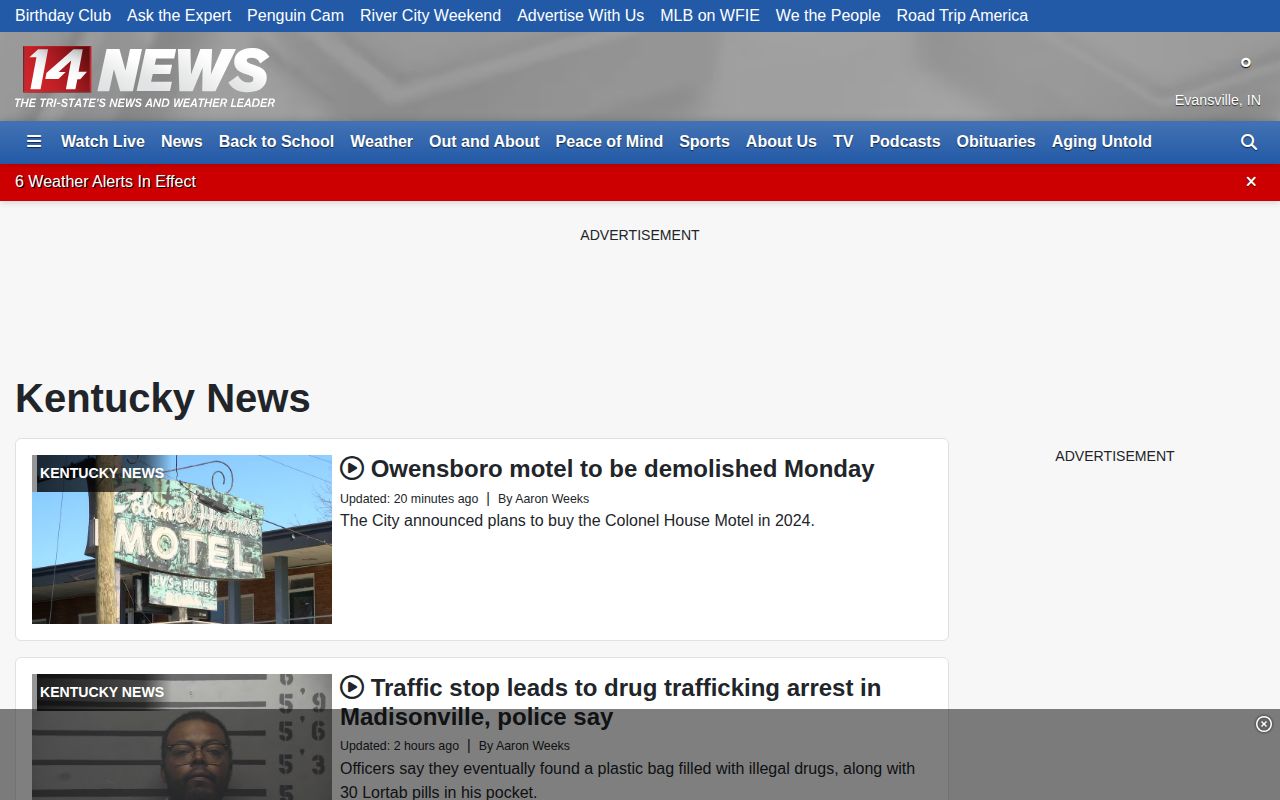
That page leans on event-driven Kentucky stories. It is not a booking roster for Daviess County, so treat it as one lens rather than a complete list.
Daviess Mugshots in Local News
Where does a local newsroom get a booking photo? Sometimes an agency hands it over with a release. Sometimes the paper pulls a record straight from the public custodian. One Owensboro Times case report credits its image to the Daviess County Detention Center, a good example of a jail photo traveling with a specific news item. That single credit proves little beyond itself. The paper does not receive every photo, and DCDC's live roster does not display every booking image either. The official public-information page makes no promise of full photo coverage.
Kentucky's open-records law sets the rules for getting records from an agency. Exemptions and withheld material still apply. A separate statute, KRS 61.8746, bars the commercial publication of a public-agency booking photograph when removal is tied to payment or other consideration. That law does not force every request to be granted, wipe out an agency's exemptions, or make any publisher the official case file. Protected categories demand extra care. Juvenile material, sealed records, and medical information all fall outside ordinary release.
A caption may name DCDC, DCSO, OPD, or KSP. Read that credit as the image's source. Don't lift the photo into a new gallery. Follow the source link instead, and check the charge wording against what the court does later.
Trace Daviess News to Court
A news article freezes what police and the newsroom knew on the day it ran. Custody details and the final outcome live elsewhere. The record trail is where those answers sit. Search with exact dates, agency names, and case numbers, never a shared name alone, since common names cause mismatches fast.
- Read the original article. Note its publication date, incident date, arresting agency, booked charge, and any case reference.
- Check the official Daviess County roster and booking-record routes. The roster answers current custody, while a DCDC request can address a past booking.
- Request the police report from OPD or DCSO when the event narrative is needed. That report is separate from the jail booking sheet.
- Search Guest CourtNet by name, county, and case number, then verify key facts with the Circuit Court Clerk.
- Read the disposition, meaning the court's later result. Keep it distinct from the charge printed at booking.
Owensboro Arrest Blotter Timing
Owensboro Times posts dated arrest write-ups fairly often when police records come in. One post may cover several arrests in report style. It will not capture every DCDC booking, every DCSO event, or every KSP action. The publication date can lag the arrest date and the booking date, too. Messenger-Inquirer runs a police-report feature that opens another local window, with the same newsroom limits attached.
No official new-bookings feed exists for Daviess County. There is no 24-hour, 48-hour, 72-hour, or weekly version. The DCDC JailTracker page shows current custody only and publishes no schedule for updates. Someone named in a later article may already be out, may have transferred, or may simply never have been picked up for coverage. Treat the article as a pointer to a date or an agency. Don't read it as proof of present custody.
Note: a news archive preserves what was reported, while DCDC and the court answer custody and case outcomes on their own timelines.
Unofficial Daviess Mugshot Pages
Commercial mugshot sites sit behind the official and local-news routes for good reason. Their pages can sit stale, borrow images, mismatch names, or drift from how a case actually ended. RecentlyBooked covers a recent window, though its update pace varies by county. Mugshots.com holds historical Daviess material. Arrests.org allows browsing by date and county. Busted Newspaper and Mugshots.zone each run their own county cards and archive patterns.
None of these replaces the DCDC roster or the court file. Their best use is narrow. Confirm a spelling, spot a possible date, or identify the agency involved, then head back to the official custodian. A running tally on any of these pages is not a county arrest statistic. A photo copied after release says nothing about who holds a person today, and an old charge tells you nothing about the case's final resolution.
Note: the RecentlyBooked Daviess page shows exactly why a secondary county index deserves a staleness warning before you trust it.
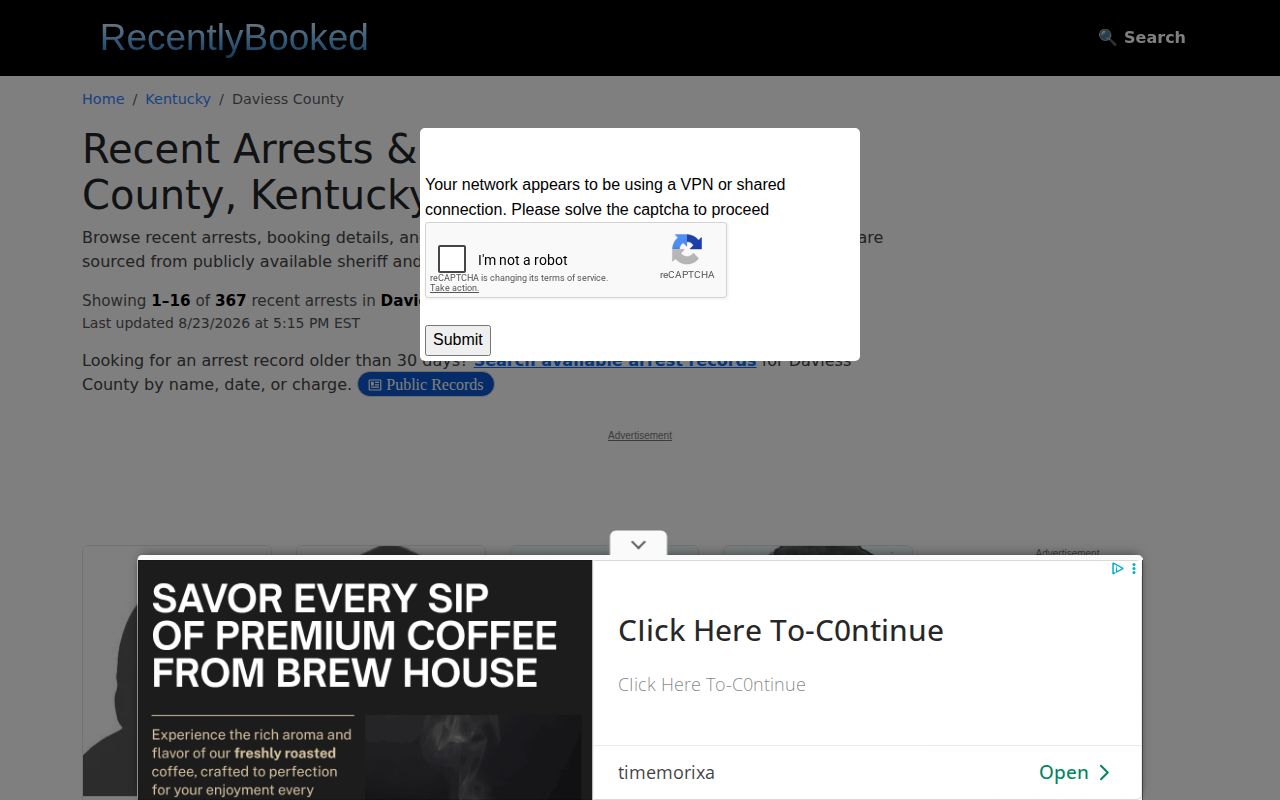
A screenshot here simply reflects one corner of the local publishing landscape. Check every entry against DCDC and the court.
Correcting Daviess Arrest Coverage
Find out who actually holds the record before you ask anyone to fix it. The detention center controls its booking and custody material. Police reports belong to the agency that wrote them, whether that is the city department or the sheriff's office. Court files sit with the Daviess Circuit Court Clerk, and each news outlet owns its own stories. Fixing one copy never fixes them all. Keep the URL, the publication date, the case number, and the official paperwork in one place before you start.
Say a headline still names a booking charge after the case ended in dismissal, acquittal, amendment, or expungement. Get the court document first, then contact the publisher through its normal correction route. Removing a jail entry will not touch a newspaper archive. A newsroom correction, in turn, leaves the court file alone.
Commercial publishers each handle removal differently, and most offer a free path. RecentlyBooked describes no-fee corrections for eligible legal or identity problems. Busted Newspaper and Mugshots.zone publish forms that ask for the exact page and supporting papers. Mugshots.com runs a record-maintenance route, while Arrests.org posts only a general contact page with no promised Daviess turnaround. None of this is a court order. Results are never guaranteed. Kentucky's anti-pay-to-remove rule is one more reason to steer clear of any service that demands payment for takedowns.
Search engines can also lag behind a publisher. An old title or preview can linger in results after the source page is fixed. Confirm the page itself is corrected first. If a cached result still shows removed material, file the search provider's outdated-content request. Save the publisher's reply and the current court record for your files. That sequence won't erase the fact that a report once ran, but it does separate a stale snippet from the corrected source.